
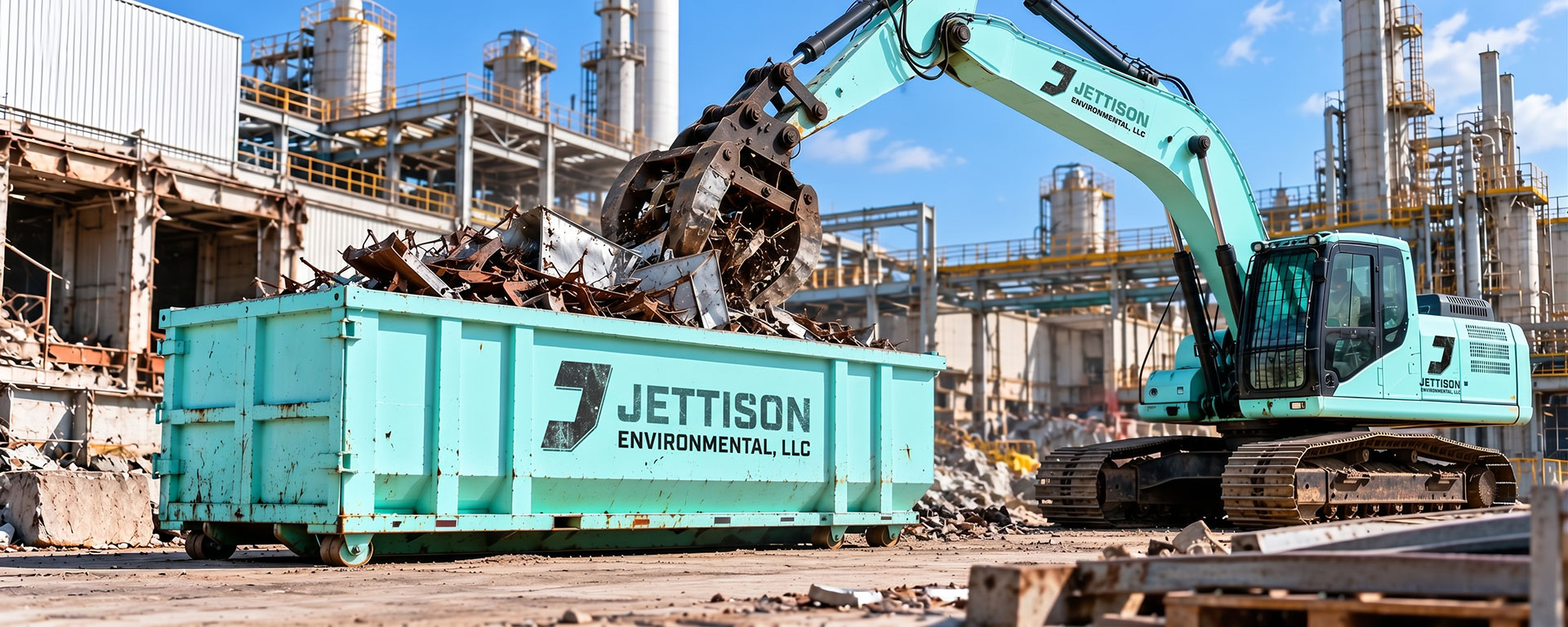
Industrial facility shutdowns require careful planning, especially when maintenance, equipment replacement, plant renovations, or full facility closures generate large amounts of waste. Whether a shutdown lasts several days or involves long-term plant decommissioning, effective waste removal is essential to keep the project organized, safe, and on schedule.
For plant managers, maintenance supervisors, and industrial contractors, coordinating waste removal before shutdown activities begin can reduce downtime and control disposal costs.
Jettison Environmental provides industrial waste management and roll-off dumpster services for commercial and industrial projects throughout Central Alabama, helping facilities manage construction debris, discarded equipment, demolition materials, and other accepted non-hazardous waste.
Waste Removal Planning Matters During Facility Closures
Unlike routine facility maintenance, an industrial shutdown often involves multiple contractors working within a limited timeframe. Maintenance crews may replace machinery, electricians may remove outdated electrical systems, and demolition contractors may dismantle equipment foundations or interior structures.
These activities can generate significant waste in a relatively short period.
Without an organized disposal plan, debris can accumulate in production areas, block access to equipment, and create unnecessary delays. A coordinated industrial shutdown waste management strategy helps ensure that containers are available, materials are separated appropriately, and waste is removed as work progresses.
The objective is simple: keep the shutdown moving without allowing waste handling to become another operational challenge.
Identifying Waste Materials Before Closure Begins
One of the first steps in planning waste removal is determining which materials will be generated and how they must be handled.
Common waste streams during industrial shutdowns include:
- Scrap metal and equipment components: Machinery housing, piping, structural steel, and dismantled equipment.
- Concrete and masonry: Equipment foundations, flooring, walls, and structural modifications.
- Construction and demolition debris: Wood, drywall, insulation, packaging, and renovation materials.
- General facility cleanup materials: Non-hazardous debris from storage areas, maintenance operations, and equipment replacement.
Material identification is especially important because industrial facilities may also contain oils, chemicals, contaminated materials, asbestos, or other regulated waste requiring specialized handling.
Identify these materials separately and manage them through appropriately qualified disposal providers. Standard construction and demolition dumpsters are not intended for hazardous waste.
Choosing the Right Roll-Off Dumpsters for Industrial Waste
Selecting the right dumpster size can significantly improve shutdown efficiency.
Jettison Environmental offers roll-off dumpster sizes for projects with different waste volumes and material requirements, allowing contractors and facility managers to match container capacity to their operations.
Larger containers may be appropriate for bulky, lightweight demolition debris, while smaller containers can be better suited to dense materials such as concrete or masonry, depending on weight restrictions.
Container placement is equally important. Dumpsters should be positioned where contractors can access them without obstructing emergency routes, loading docks, equipment movement, or other essential facility operations.
For larger shutdowns, multiple containers may be needed to separate materials and accommodate simultaneous work in different sections of the plant.
Scheduling Dumpster Deliveries
Industrial shutdowns frequently operate under strict deadlines. Every hour of unnecessary delay can affect maintenance schedules, contractor availability, and the planned restart of production.
Rather than waiting until containers are full, facility managers should establish a debris removal schedule based on anticipated work phases.
For example, equipment dismantling may generate significant scrap metal early in the shutdown, while concrete removal and construction debris may increase during later stages.
By coordinating roll-off dumpster delivery, pickup, and waste hauling services with these activities, facilities can reduce the likelihood of overflowing containers or debris accumulating in active work areas.
Advance scheduling also helps waste management providers allocate equipment and hauling resources to accommodate periods of increased demand.
Managing Concrete Removal
Industrial shutdowns often involve modifications to concrete floors, machinery foundations, loading areas, or interior structures.
These projects may require specialized concrete cutting before equipment can be removed or new machinery installed.
Jettison Environmental’s concrete cutting and demolition services can complement its roll-off dumpster and waste hauling capabilities, helping contractors coordinate several aspects of facility modification through one provider.
Because concrete is exceptionally heavy, disposal planning should account for container weight limits, loading methods, and appropriate disposal destinations.
Separating concrete from general construction debris may also simplify material handling and support recycling opportunities where available.
Coordinating Disposal Through Local C&D Landfill Resources
Waste removal does not end when a dumpster leaves the industrial facility. Contractors must also consider where materials will be transported and whether the disposal location accepts the waste being generated.
Jettison Environmental operates construction and demolition landfill resources in Central Alabama, providing local disposal infrastructure for eligible non-hazardous construction and demolition materials.
Access to established disposal resources can help simplify hauling logistics and reduce the number of separate service providers involved in the project.
For industrial shutdowns generating substantial construction debris, coordinating transportation and disposal in advance is an important part of maintaining a predictable waste management schedule.
Reducing Shutdown Costs Through Better Waste Management
The cost of industrial waste removal extends beyond dumpster rental and disposal fees.
Poor planning can result in additional handling, unnecessary container exchanges, contractor delays, and inefficient use of labor and equipment.
A well-organized shutdown waste management plan can help control these expenses by matching dumpster sizes to waste volumes, separating heavy materials, scheduling timely pickups, and coordinating debris removal with contractor activities.
The greatest potential savings often come from preventing disruptions rather than simply reducing disposal costs.
When waste removal is integrated into the overall shutdown schedule, maintenance and construction teams can focus on completing their assigned work instead of managing accumulating debris.
Partner With Jettison Environmental for Industrial Shutdown Waste Management
Whether an industrial facility is undergoing scheduled maintenance, replacing production equipment, renovating manufacturing space, or preparing for permanent closure, waste management should be part of the planning process from the beginning.
Jettison Environmental brings together roll-off dumpster rentals, waste hauling, concrete cutting, demolition experience, and local C&D landfill resources to help contractors and facility managers coordinate waste removal efficiently.
By working with an experienced provider that understands the demands of industrial projects, facilities can simplify logistics, reduce unnecessary downtime, and keep shutdown activities moving toward completion.
Planning an industrial facility shutdown in Central Alabama? Contact Jettison Environmental to discuss industrial waste management, roll-off dumpster rentals, and demolition support for your upcoming project.
FAQs –Waste Management During Facility Closure
Q: Why is waste removal planning important during an industrial facility shutdown?
A: Industrial shutdowns often involve multiple contractors performing equipment removal, maintenance, demolition, and facility modifications within a limited timeframe. Planning waste removal in advance helps prevent debris accumulation, reduces scheduling conflicts, and keeps work areas accessible, minimizing unnecessary downtime.
Q: What types of waste are commonly generated during industrial facility shutdowns?
A: Common materials include scrap metal, discarded machinery components, concrete, masonry, construction debris, wood, packaging, and general non-hazardous facility waste. Hazardous or regulated materials, including certain chemicals, oils, and contaminated debris, require separate handling and disposal through appropriately qualified providers.
Q: What size roll-off dumpster is best for an industrial shutdown?
A: The appropriate dumpster size depends on the type, weight, and volume of waste generated. Larger roll-off dumpsters may suit bulky construction debris, while smaller containers often work better for heavy materials such as concrete. Jettison Environmental can help determine suitable container sizes based on project requirements and applicable weight restrictions.
Q: How can industrial facilities reduce waste removal costs during a shutdown?
A: Facilities can control waste removal expenses by identifying waste streams in advance, selecting appropriately sized dumpsters, separating heavy materials, and coordinating container exchanges with shutdown activities. Effective planning can also reduce unnecessary handling, contractor delays, and interruptions to scheduled maintenance or construction work.
Q: Can Jettison Environmental provide concrete cutting and waste removal for industrial facility renovations?
A: Yes. Jettison Environmental provides concrete cutting, demolition support, roll-off dumpster rentals, and waste hauling services. These complementary capabilities can help industrial facilities coordinate concrete removal, equipment foundation modifications, and construction debris disposal through one experienced provider.
Q: Does Jettison Environmental provide landfill disposal services for industrial shutdown debris?
A: Yes. Jettison Environmental operates construction and demolition landfill resources in Central Alabama for eligible non-hazardous C&D materials. Disposal acceptance depends on the type and condition of the waste. Hazardous materials and other prohibited waste must be handled through appropriate specialized disposal facilities.
Related Articles
Manufacturing & Plant Facility Dumpster Rental for Industrial Waste Management
Industrial facilities generate substantial waste during equipment replacement, maintenance shutdowns, and plant renovations. Learn how industrial dumpster rentals and coordinated debris removal help maintain efficient, organized operations.
https://jettisonenvironmental.com/industrial-waste-management/
Contractor’s Guide to Using Roll-Off Dumpsters for Construction Projects
Choosing the right roll-off dumpster and scheduling timely container exchanges are essential for keeping projects on track. Explore practical recommendations for managing construction debris, heavy materials, and jobsite waste.
https://jettisonenvironmental.com/contractor-dumpster-rental-guide/
Construction Site Efficiency: Why a Dedicated Waste Strategy Matters
Effective waste management can reduce downtime, improve jobsite safety, and help control project expenses. Discover how a planned debris removal strategy supports productivity during construction, renovation, and industrial facility modifications.
https://jettisonenvironmental.com/construction-site-waste-management/