
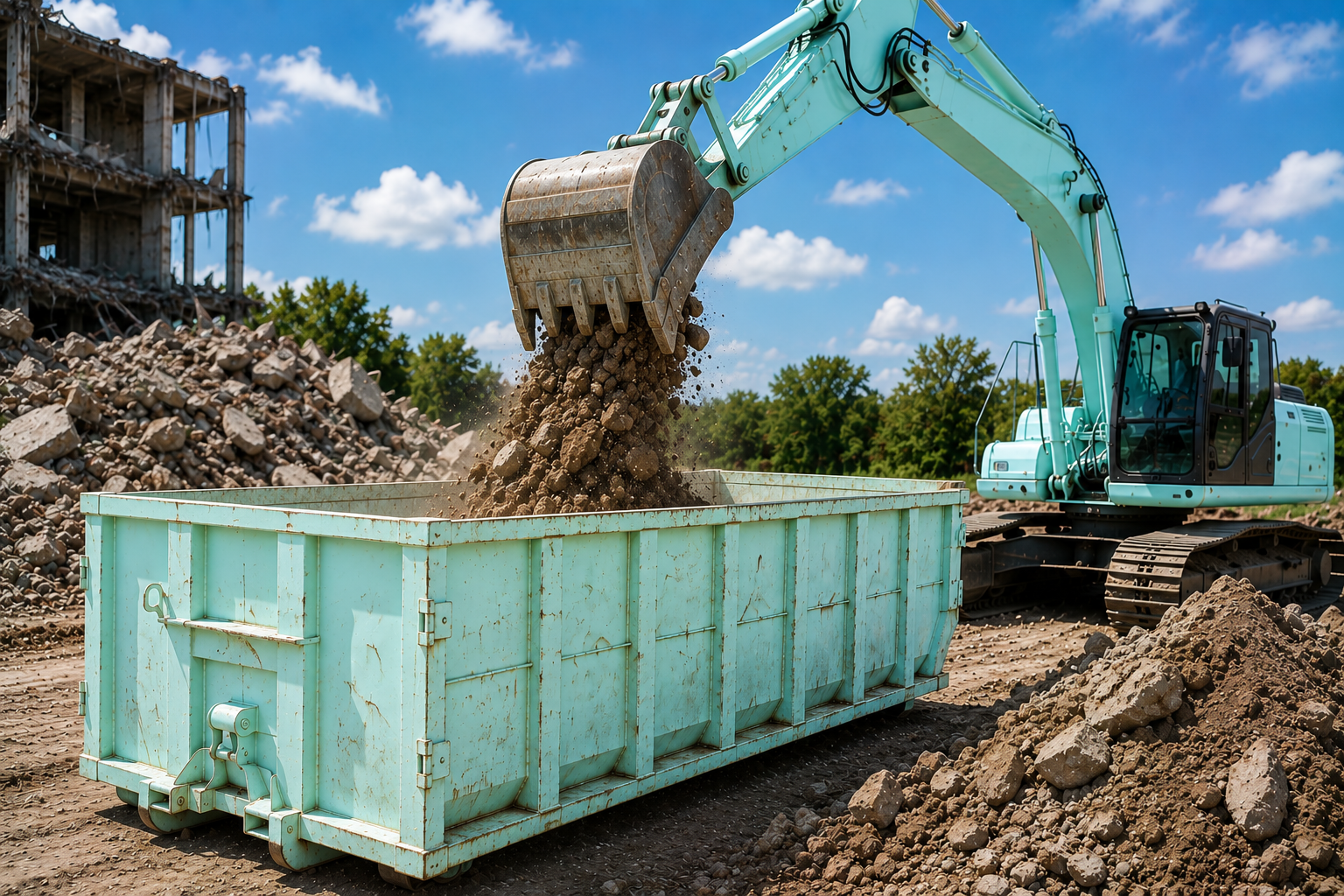
Disposing of heavy materials during projects like driveway removal, patio demolition, sidewalk replacement, or excavation requires careful planning. Unlike lighter debris, materials such as concrete, brick, asphalt, dirt, rock, and block can exceed dumpster weight limits before the container appears full.
Selecting the right container and understanding weight restrictions help keep your project on schedule and prevent delays or extra costs. Talk with the Jettison Environmental team.
Why Heavy Materials Require Special Planning
Many construction materials are denser than they appear. Even a small amount of broken concrete or compacted dirt can weigh several tons. Filling a large dumpster with these materials may exceed legal highway weight limits.
Waste haulers must comply with Department of Transportation (DOT) regulations on maximum vehicle weights. A dumpster may reach its hauling capacity even if it is not visibly full. Planning ahead ensures the container can be safely transported to the disposal facility.
Common Heavy Materials
- Concrete slabs
- Sidewalks
- Driveways
- Brick and masonry
- Asphalt
- Stone
- Dirt and soil
- Sand
- Gravel
- Concrete block
- Pavers
Avoid Overloading a Dumpster
- Exceed DOT weight regulations
- Require material to be removed before pickup
- Delay project schedules
- Increase transportation costs
- Create unsafe hauling conditions
Choosing the Right Dumpster
- Type of material
- Estimated weight
- Project duration
- Available job site space
- Equipment used for loading
Separate Materials Whenever Possible
Separating heavy materials from general construction debris offers several advantages.
Sorting materials may:
- Improve recycling opportunities
- Simplify disposal
- Reduce contamination
- Improve job site organization
- Speed unloading at the disposal facility
If your project generates both demolition debris and recyclables, discuss your disposal plan before delivery to simplify the process.
Safety Matters on Every Job Site
- Load heavier materials first.
- Spread weight evenly across the dumpster floor.
- Avoid stacking material above the top rail.
- Keep the loading area clean and stable.
- Follow all equipment safety procedures.
Work with an Experienced Waste Management Partner
Heavy material disposal involves more than renting a dumpster. It requires knowledge of transportation regulations, disposal requirements, acceptable materials, and weight limits.
Jettison Environmental works with contractors, municipalities, demolition companies, landscapers, and property owners throughout Alabama to provide dependable waste management solutions for projects of every size.
Whether you need a roll-off dumpster delivered or access to our Construction & Demolition landfills, our team can help you select the right solution before work begins.
Keep Your Project Moving
Concrete removal, excavation, and demolition projects progress faster when debris management is planned from the start. Choosing the right dumpster, following loading guidelines, and working with an experienced waste management company help prevent delays and keep your project safe and efficient.
Contact Jettison Environmental today to learn more about roll-off dumpster rentals, construction debris disposal, and C&D landfill services throughout Alabama.
FAQs – Best Practices Removing Heavy Construction Materials
Q: Why can’t I completely fill a dumpster with concrete or dirt?
A: Concrete, dirt, brick, and similar materials are extremely dense. A dumpster may reach its legal hauling weight long before it appears full, so these materials often require partial loads.
Q: Can concrete, brick, and asphalt be placed in the same dumpster?
A: In many cases, yes. However, depending on your project and disposal requirements, separating certain materials may improve recycling opportunities and simplify disposal. Jettison Environmental can recommend the best approach.
Q: What happens if my dumpster is overweight?
A: An overweight dumpster may not be legally transported until excess material is removed. This can delay pickup and potentially result in additional service charges.
Q: Is dirt considered construction debris?
A: Dirt generated during excavation or construction projects is often handled differently than general construction debris due to its weight. Discuss your project with our team before scheduling your dumpster.
Q: Can Jettison Environmental help determine the right dumpster size?
A: Yes. Our experienced team can recommend the appropriate dumpster size based on the type of material, estimated volume, project duration, and expected weight.